The 2026 Top 3D Printed Prosthetics Manufacturers will be judged by more than printer speed or attractive designs. Clinical fit matters. Socket comfort matters. So does reliable follow-up.
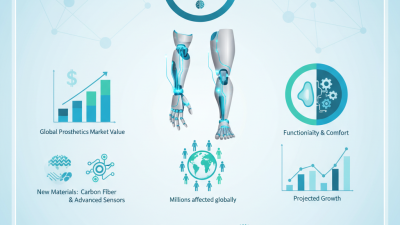
The World Health Organization estimates that more than 2.5 billion people need assistive products worldwide. This figure could exceed 3.5 billion by 2050. Its Global Report on Assistive Technology also highlights major access and affordability gaps. These findings place 3D Printed Prosthetics within a wider healthcare challenge, not merely a manufacturing trend.
Industry momentum is visible. The Wohlers Report 2024 valued the global additive manufacturing industry at $20.035 billion in 2023. It reported 13.5% annual growth. However, market growth does not guarantee better patient outcomes. A polished prototype may still cause pressure, skin irritation, or poor alignment.
Hugh Herr, an MIT professor and leading prosthetics researcher, has said, “The human body is not designed to be static, but rather to move.” That principle should guide every manufacturer comparison. The strongest companies combine digital scanning, clinical assessment, durable materials, and patient feedback.
This ranking examines those practical differences. It considers production capability, customization, clinical partnerships, material choices, and documented experience. It also asks uncomfortable questions. Are replacement parts easy to obtain? Can children receive affordable adjustments as they grow? Are published performance claims independently verified?
No manufacturer is perfect. Yet careful evaluation can separate useful innovation from impressive marketing.
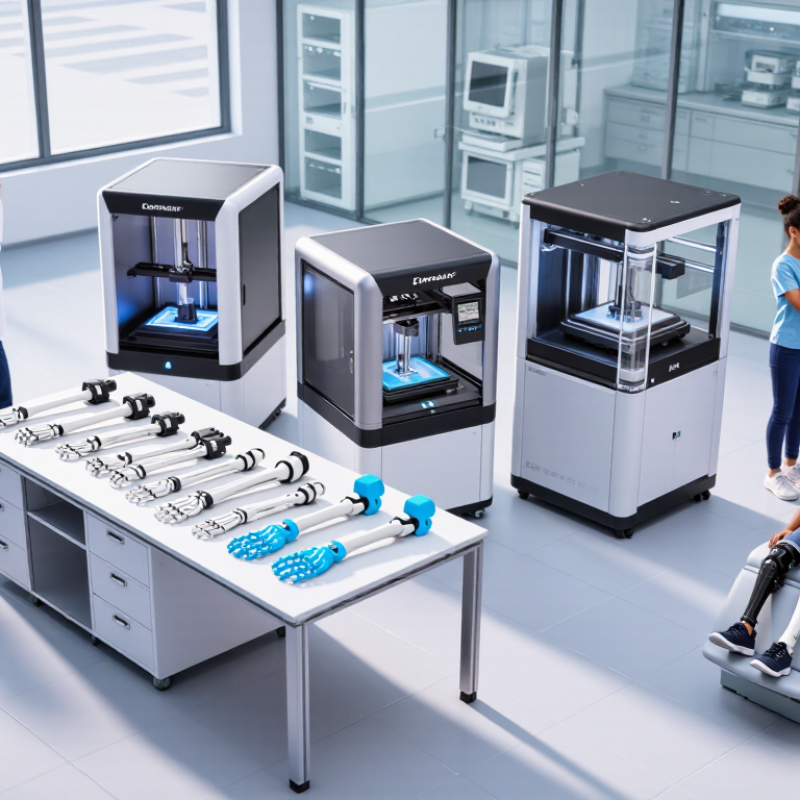
3D-printed prosthetics are assistive devices made from digital designs and layered materials. A clinician may scan a residual limb, adjust its shape in CAD software, and print a customized socket or cosmetic cover. Some systems also print joint parts, adapters, or lightweight structural components. The final device usually combines printed and conventional materials.
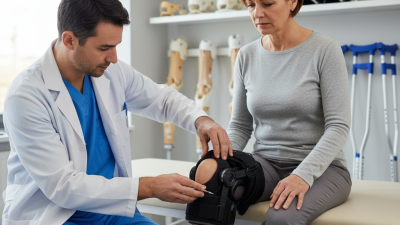
The fit is personal. A socket that looks accurate can still create pressure, heat, or skin irritation during daily use. Certified prosthetists must check alignment, strength, suspension, and walking comfort.
The WHO and UNICEF Global Report on Assistive Technology estimates that more than 2.5 billion people need assistive products worldwide. That figure could exceed 3.5 billion by 2050. Meanwhile, the Wohlers Report 2024 valued the global additive manufacturing industry at 20.035 billion dollars in 2023. However, this figure covers every major application, not prosthetics alone. That distinction matters. Manufacturing growth does not automatically prove clinical success.
Tips: Ask about material testing, load ratings, cleaning, repair access, and adjustment appointments. Request a gradual wearing schedule. Record red marks, pain, or unusual movement. Do not judge comfort from appearance alone. Digital customization can reduce production time, but it cannot replace clinical fitting. The process remains imperfect, especially when limb volume changes or the user’s activity level shifts. Regular review is essential.

3D-printed prosthetics begin with the person, not the printer. A prosthetist studies limb length, skin sensitivity, movement, work demands, and daily routines. A structured-light scan or careful measurements capture the residual limb. The scan becomes a digital model in computer-aided design software. Designers adjust the socket for pressure distribution, clearance, and suspension. They also model joints, openings, and attachment points around the user’s anatomy. The first fit is rarely perfect. Small changes can prevent pain later.
Before fabrication, the digital design is reviewed by prosthetists, engineers, and rehabilitation specialists when appropriate. They check wall thickness, load paths, edge softness, and print orientation. Flexible polymers may suit liners or comfort zones, while stronger materials can support structural components. Material choice depends on body weight, activity, heat, moisture, and maintenance needs. The design is sliced into thin layers, then printed through extrusion or another controlled process. Each layer must bond consistently. A beautiful model can still fail if settings are poorly calibrated.
After printing, technicians remove supports, smooth contact surfaces, and inspect the part for voids or warping. The user tests the prosthesis during standing, walking, grasping, or other relevant tasks. Clinicians observe pressure marks, while users describe discomfort that instruments may miss. Adjustments may involve reshaping the socket, changing alignment, or modifying stiffness. This feedback loop is essential. It is also slower than many advertisements suggest. Printed parts are not automatically safer or cheaper; inspection, follow-up, and replacement planning remain necessary.
Material selection is an important step in designing 3D-printed prosthetic components. The chart compares typical nozzle-temperature midpoints for commonly used FFF materials. Actual settings vary by filament formulation, printer, geometry, and required mechanical performance.
Reference ranges used: PLA 190–220°C, PETG 230–250°C, TPU 210–240°C, and Nylon 240–280°C. The plotted value is the midpoint of each typical range.
The leading 3D-printed prosthetics manufacturers in 2026 are defined by clinical accuracy, material testing, and fitting support. Demand is expanding rapidly. The World Health Organization reports that more than 2.5 billion people need assistive products worldwide. This figure may exceed 3.5 billion by 2050. Additive manufacturing helps manufacturers produce lightweight sockets, custom limb components, and adjustable designs. A patient may receive a socket shaped from a digital scan, with ventilation openings placed around sensitive skin. That detail matters.
Manufacturers should also prove repeatable quality, not only attractive prototypes. The Wohlers Report 2024 valued the global additive manufacturing industry at 20.035 billion US dollars in 2023. It recorded 13.5% annual growth. However, market growth does not guarantee clinical success. Buyers should review production tolerances, certification processes, clinician partnerships, and after-sales adjustments. A device can look precise on a screen but still cause pressure points during a long walk. My practical concern is simple: some suppliers may understate maintenance needs. Real-world feedback remains essential.
Tips: Ask for documented material testing, fitting data, and repair timelines. Check whether technicians can modify the design after use. Request a physical trial component when possible. Comfort is not a marketing detail. It is measurable through gait, skin condition, and daily wear time. Even strong manufacturers should keep improving, because patient anatomy and movement rarely follow a perfect digital model.
How to Compare 3D-Printed Prosthetics Manufacturers
Comparing 3D-printed prosthetics manufacturers requires more than checking prices or glossy product images. Examine their clinical experience, design process, and material testing records. A reliable manufacturer should explain how scans become a socket, brace, or functional limb component. Ask about fit adjustments, pressure mapping, and comfort checks during real fittings. These details reveal practical expertise.
Review customization options carefully. Can the team modify trim lines, alignment, weight, or suspension? Check whether engineers and prosthetists work together. Confirm material durability, skin-contact safety, cleaning instructions, and expected service life. Request documented quality procedures and traceable production records. Delivery speed matters, but rushed production may create painful pressure points. I have seen impressive prototypes fail after repeated daily use. That possibility deserves honest discussion.
Tips: Request a sample fitting plan, not only a catalog. Ask how many revisions are included. Compare total costs, including scanning, adjustments, repairs, and replacement parts. Speak with rehabilitation professionals or users who have similar mobility needs. Pay attention to vague answers. A manufacturer may offer advanced printing but weak aftercare. No supplier is perfect. Choose the team that communicates limitations clearly and responds responsibly when a design needs improvement.
Anonymized comparison framework based on verifiable medical-device, manufacturing, customization, and support criteria.
| Comparison Dimension | Manufacturer 1 Clinical Customization Profile |
Manufacturer 2 Digital Production Profile |
Manufacturer 3 High-Volume OEM Profile |
|---|---|---|---|
| Primary customer fit | Clinics, prosthetists, rehabilitation centers, and complex custom cases | Digitally enabled clinics and direct coordination with patients or caregivers | Hospitals, distributors, established device companies, and repeat production programs |
| Typical additive processes | Selective laser sintering or multi-jet fusion for strong polymer components; post-processing is required | Polymer 3D printing supported by digital scanning, CAD modification, and iterative fitting | Validated powder-bed or filament-based production selected according to part geometry and volume |
| Common material options | Medical-grade or engineering thermoplastics such as polyamide; flexible materials may be used for interfaces | Rigid thermoplastics, flexible polymers, and patient-contact materials selected for the intended use | Material selection documented by application, mechanical requirements, biocompatibility needs, and production scale |
| Customization workflow | Clinical assessment → scan or impression → CAD design → fitting review → fabrication → adjustment | Digital intake → scan upload → remote design review → printed prototype or final component → feedback cycle | Approved design file → controlled production → inspection → documented release and repeat-order management |
| Best evaluation metric | Fit quality, clinician collaboration, adjustment capability, and patient comfort | Digital turnaround, communication quality, scan-to-part accuracy, and revision efficiency | Process repeatability, dimensional consistency, capacity, inspection records, and supply continuity |
| Clinical and regulatory evidence | Request device-specific regulatory status, risk documentation, material safety data, and clinical-use references | Verify intended-use claims, patient-contact material evidence, design controls, and responsibility for final fitting | Request an ISO 13485 quality-management certificate where applicable, technical files, inspection plans, and change-control records |
| Biocompatibility considerations | Confirm whether skin-contacting components have been evaluated under the applicable biological-safety requirements | Confirm skin-contact duration, cleaning method, surface finish, and applicable biological evaluation data | Require material traceability, lot records, surface-treatment information, and documented biological-safety assessment |
| Quality-control checkpoints | Visual inspection, fit check, dimensional review, surface finishing, and clinician approval | File validation, build-orientation review, dimensional sampling, post-processing inspection, and revision tracking | Incoming-material control, machine monitoring, dimensional inspection, batch records, nonconformance control, and final release |
| Lead-time questions to ask | Ask for design-review time, first-fitting schedule, revision policy, and replacement-part availability | Ask how quickly scans are reviewed, how many design revisions are included, and how shipping is coordinated | Ask for standard production capacity, repeat-order lead time, safety-stock options, and contingency planning |
| Cost structure | Usually influenced by clinical design time, fitting complexity, material, post-processing, and follow-up adjustments | Usually influenced by scanning, digital design, printing, shipping, revisions, and remote support | Usually influenced by tooling or setup, production volume, inspection requirements, packaging, and logistics |
| Key risk to manage | A printed part is not automatically a clinically suitable prosthesis; professional assessment and fitting remain essential | Poor scan quality, incomplete patient information, or unclear responsibility for clinical decisions can cause fit problems | Scaling a prototype into a repeatable medical-device process requires validation, traceability, and controlled changes |
| Recommended verification documents | Quality certificate, material datasheet, design record, inspection report, fitting protocol, and warranty terms | Digital workflow description, data-protection policy, revision history, material evidence, inspection report, and support terms | Quality certificate, process-validation summary, material and batch traceability, inspection plan, change-control procedure, and service-level agreement |
Choosing the right manufacturer starts with the patient, not the printer. A skilled prosthetist should review the person’s age, activity level, residual limb condition, comfort goals, and daily environment. A runner may need different support from someone walking mainly indoors. The manufacturer must also communicate directly with the clinical team. Shared scans, fitting notes, and adjustment records can prevent avoidable errors. Ask how the company checks socket alignment, material strength, skin contact, and weight distribution before delivery. Clear testing matters.
Look beyond production speed. A strong manufacturer offers sample designs, documented quality controls, repair guidance, and practical timelines. Ask who handles changes after the first fitting. A patient may notice pressure near the knee after only two hours, not during a short clinic trial. That feedback should lead to a careful revision, not a rushed replacement. The top three choices may look similar online, but their support systems can differ sharply. A polished website proves little. I would treat any promise of a perfect fit as a warning. Real fitting work involves measurement, observation, and sometimes correction. Manufacturers should explain material limitations in plain language and protect patient data during digital file transfers. Independent clinical experience, transparent documentation, and honest discussion of failure risks are more valuable than impressive photographs. Availability also matters. A distant supplier may create delays when a small adjustment is urgently needed.