Choosing the best Prosthetic Arms from China requires more than comparing prices, motors, or polished product photographs. Fit matters. So does evidence.
The World Health Organization and UNICEF reported in the Global Report on Assistive Technology (2022) that more than 2.5 billion people need at least one assistive product. That number may reach 3.5 billion by 2050. These figures reveal a serious access problem, especially for users needing durable and affordable upper-limb technology. Chinese manufacturers now offer body-powered, myoelectric, and multi-articulating devices. Their quality, however, varies considerably.
A responsible comparison should examine socket comfort, hand strength, battery endurance, waterproofing, control learning time, repair access, and clinical fitting support. It should also review applicable NMPA registration information and supplier quality records. ISO 10328 testing can indicate structural performance, while ISO 10993 may address biological safety for relevant materials. IEC 60601 standards can apply to certain powered medical equipment. Certification is not proof of personal suitability.
Real experience often exposes what brochures miss. A user may struggle with sweat inside the socket, delayed finger movement, or a charger that is difficult to replace. A clinic may value dependable calibration more than extra grip patterns. That detail matters.
This guide compares leading Chinese options through practical, clinical, and technical criteria. Available public data remain uneven. Some claims need independent verification. “Best” is therefore conditional, not absolute. The right arm should match the user’s residual-limb condition, daily tasks, budget, and local rehabilitation support. A careful trial remains essential.
What Are the Best Prosthetic Arms From China?
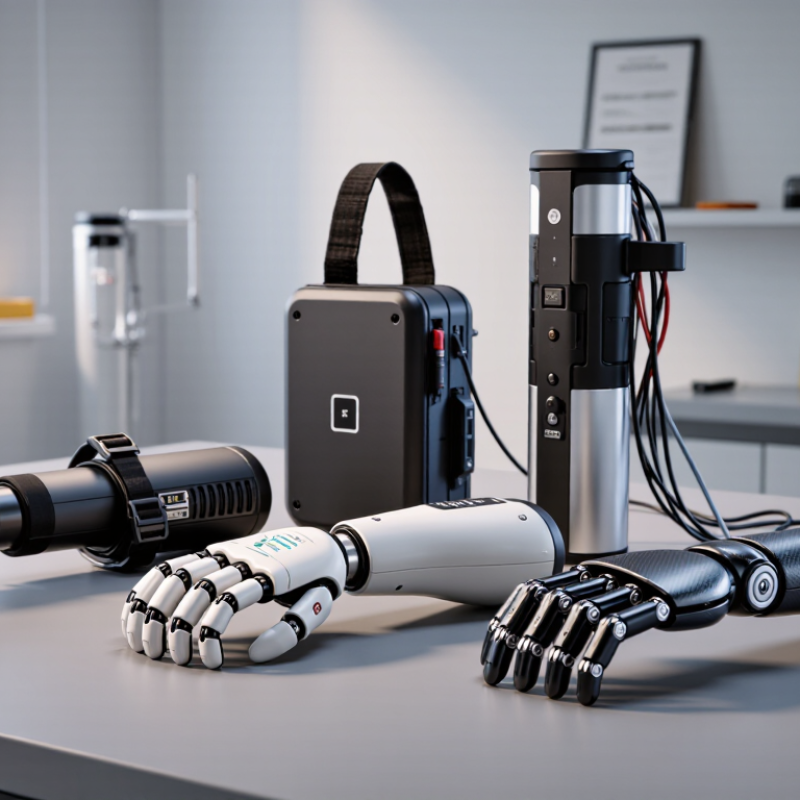
China offers several types of prosthetic arms for different needs, budgets, and activity levels. Passive prostheses can improve appearance and provide light support during daily tasks. Body-powered arms use cables and shoulder movement to control a terminal device. They are durable, practical, and usually easier to maintain. Myoelectric arms respond to electrical signals from residual muscles. Users may open, close, or change hand positions with small muscle contractions. However, control requires training, proper electrode placement, and regular skin checks.
Hybrid prosthetic arms combine body-powered and electronic functions. They may suit users who need stronger grip and more flexible control. Some suppliers also provide activity-specific designs for work, sports, or water-resistant use. Pediatric options often allow simple adjustments as a child grows. Quality depends on socket comfort, alignment, materials, software, and clinical support. A lower price does not always mean better value. Online images cannot confirm fit or real-world performance. I have found that small socket problems can become painful during long use.
Tips: Ask for measurements, warranty terms, replacement parts, and service procedures. Request a fitting plan from a licensed prosthetist. Test grip strength with common objects, such as a cup or phone. Check whether training is included. Confirm compatibility with your daily activities. Most importantly, allow time for adjustments. Even a well-designed arm may need several fitting sessions before it feels natural.

The best Chinese prosthetic arms are defined by function, comfort, and evidence, not appearance alone. The WHO and UNICEF Global Report on Assistive Technology (2022) estimates that over 2.5 billion people need assistive products worldwide. This demand increases pressure for affordable, repairable designs. Chinese engineering teams increasingly combine modular structures with locally available components. That can reduce service delays.
Myoelectric control remains central. Surface electrodes detect residual muscle signals and convert them into hand movements. Some systems add pattern-recognition software for more natural gestures. Inertial sensors can support wrist rotation and movement tracking. Lightweight carbon-fiber frames reduce fatigue during daily use. Three-dimensional scanning also improves socket fitting. The WHO report emphasizes user-centered design, yet many products still require repeated clinical adjustments.
Useful details matter. A well-fitted socket should not pinch the upper arm when the user lifts a cup. A quiet motor helps in classrooms and offices. Replaceable batteries support travel and home maintenance. Tactile feedback is promising, but its practical value differs between users. Published comparisons remain uneven, especially for long-term reliability in humid environments. Independent testing should examine grip strength, battery cycles, repair time, and control accuracy. A polished demonstration is not enough. Real users need dependable performance after months of ordinary wear.
| Technology or Prosthetic Type | How It Works | Typical Functional Capability | Main Advantages | Important Limitations | Best Suited For |
|---|---|---|---|---|---|
| Body-Powered Prosthetic Arm | Uses shoulder or upper-body movement to tension a cable and operate a terminal device. | Voluntary opening or closing of a hook or hand, depending on the mechanical design. | Durable, relatively lightweight, energy-independent, and generally easier to maintain. | Requires deliberate body movement; the harness may be visible and can become uncomfortable during extended use. | Users who prioritize reliability, outdoor use, physical work, or low maintenance. |
| Single-Channel Myoelectric Arm | Surface electrodes detect electrical activity from residual muscles and send signals to a powered motor. | Usually controls one primary function at a time, such as opening or closing a powered hand. | Provides cable-free control, reduced harness dependence, and a more natural-looking design. | Electrode signals can be affected by sweat, socket movement, muscle fatigue, or inconsistent contact. | Users with suitable residual muscle signals who need basic powered hand control. |
| Multi-Grip Myoelectric Hand | Processes muscle signals through embedded control electronics to select different grasp patterns. | May provide several programmed grips, including open hand, pinch, tripod, lateral, and power grasp. | Improves object-handling versatility for daily activities and can support more natural task selection. | Higher cost, greater training requirements, battery dependence, and more complex servicing. | Users with transradial or transhumeral limb loss who need several everyday grasp patterns. |
| Pattern-Recognition Control | Software analyzes multiple electromyographic signal patterns and maps them to predefined prosthetic actions. | Can support faster switching between hand positions or other functions when the system is properly trained. | Reduces reliance on repeated muscle co-contractions and can make multi-function control more intuitive. | Performance depends on signal quality, calibration, training, and the stability of the socket and electrodes. | Experienced myoelectric users seeking more efficient control of multiple functions. |
| Powered Elbow Module | A motorized joint provides powered flexion, extension, or position assistance for an above-elbow prosthesis. | Raises and positions the forearm while working with a terminal device such as a hand or hook. | Restores an additional joint function and can improve reach, positioning, and bilateral tasks. | Adds weight, power consumption, mechanical complexity, and control demands. | Users with transhumeral or higher-level amputation who need powered elbow positioning. |
| 3D-Printed Socket and Cosmetic Cover | Digital scanning, computer-aided design, and additive manufacturing are used to produce customized external components. | Provides a personalized interface or cover; the actual functional performance depends on the integrated components. | Supports rapid design changes, individualized shape, lightweight structures, and cosmetic customization. | Printed materials and fit quality vary; high-load areas may still require stronger conventional materials. | Users who need a customized fit, reduced weight, or faster design iteration. |
| Lightweight Modular Structure | Interchangeable components use materials such as aluminum alloys, titanium, carbon-fiber composites, and engineering polymers. | Allows the prosthesis to be configured for different limb levels, terminal devices, and activity requirements. | Balances strength, weight, adjustability, and repairability compared with a fully integrated structure. | Material selection affects price, impact resistance, appearance, and the total weight of the system. | Users who require a configurable system or expect changes during rehabilitation. |
| Embedded Rechargeable Battery System | A rechargeable lithium-based battery supplies power to motors, sensors, and control electronics. | Enables repeated powered movement during the battery's available operating cycle. | Removes the need for disposable batteries and supports compact, integrated device designs. | Requires regular charging; capacity and service life are affected by load, temperature, and usage patterns. | Users who can maintain a regular charging routine and need powered functions throughout the day. |
| Tactile or Vibrotactile Feedback | Sensors detect grip force, contact, or joint position and convey information through vibration or pressure on the residual limb. | Can help users estimate contact or force without continuously looking at the prosthetic hand. | May improve situational awareness and reduce excessive visual monitoring during object handling. | Feedback is indirect and requires user training; sensory restoration is not equivalent to natural touch. | Users who want additional control information for delicate or visually demanding tasks. |
| Adjustable Socket and Suspension System | Uses customized liners, socket geometry, suction, locking, or harness methods to secure the prosthesis to the residual limb. | Improves stability, alignment, electrode contact, and transfer of movement between the user and the device. | Often has a greater effect on comfort and control than adding advanced electronics alone. | Requires professional fitting and periodic adjustment as limb volume, skin condition, or activity changes. | Nearly all prosthetic-arm users, especially those experiencing fit or suspension problems. |
Note: The most suitable prosthetic arm depends on amputation level, residual muscle signals, socket fit, intended activities, rehabilitation support, maintenance requirements, and total cost. A higher number of features does not automatically mean better real-world performance.
Choosing a prosthetic arm from China requires more than comparing prices. Quality begins with materials, socket design, joint strength, and manufacturing consistency. Ask for test data, warranty terms, and documented quality controls. A reliable supplier should explain how defects are handled, not only display polished product photos.
Functionality depends on your daily routines. A terminal device for kitchen work may differ from one used for lifting tools. Check grip patterns, battery life, charging time, control response, and water resistance. During a fitting, try opening a bottle, carrying a cup, and typing. Small delays can become frustrating after repeated use. My first comparison focused too much on hand movement. I underestimated the importance of easy charging and simple maintenance.
Comfort deserves equal attention. The socket should distribute pressure without causing redness, slipping, or excessive heat. Weight matters around the shoulder and upper back. Ask whether the arm can be adjusted as your residual limb changes. A qualified prosthetist should assess alignment and train you through realistic tasks. Remote support may sound convenient, but follow-up care can be difficult across borders. Confirm service hours, replacement-part availability, and fitting support before ordering. No device fits perfectly at first. A careful trial often reveals problems that specifications hide.
Chinese prosthetic arm manufacturers now offer several practical options for different users. Established producers commonly develop body-powered, myoelectric, and multi-articulating models. Body-powered arms remain durable, lightweight, and easier to maintain. Myoelectric models use muscle signals to control hand movements. Advanced multi-articulating designs can provide several grip patterns, including pinch, tripod, and open-hand positions. However, performance depends heavily on socket fitting, electrode placement, and user training. The most expensive model is not always the most useful.
Many leading Chinese manufacturers supply complete devices, replacement components, and fitting support through clinical partners. Buyers should examine certification records, service coverage, battery quality, and software compatibility. A reliable supplier should explain expected grip strength, charging time, water resistance, and repair procedures. Independent rehabilitation professionals can also assess whether a model suits work, daily dressing, cooking, or outdoor use. Product descriptions sometimes sound impressive, but real-world control may feel slower than expected. That difference deserves honest discussion.
Tips: Request a hands-on trial before purchase. Test the arm while lifting a cup, opening a zipper, and carrying a light bag. Ask how calibration changes after sweating or socket movement. Check local maintenance access and replacement costs. Cosmetic appearance matters, but comfort usually matters more. I would also record daily difficulties for one week before choosing, because initial excitement can hide problems with weight, noise, or control.
The best prosthetic arm is not always the most advanced model. Fit comes first. A certified prosthetist should measure the residual limb, shoulder position, skin condition, and daily tasks. The socket must feel secure without creating pressure points. Users should test several movements, including lifting a cup, opening a door, and carrying a light bag. No fitting is perfect on day one. Expect adjustments after real-world use.
Costs vary widely. A basic body-powered arm may cost several thousand US dollars, while a multi-articulating model can reach tens of thousands. The quotation should include socket fabrication, control training, shipping, taxes, and follow-up adjustments. Cheap offers may exclude essential services. That detail is easy to miss. Ask for a written breakdown and payment schedule before ordering.
Certification requires careful checking. Request the manufacturer’s quality documents, such as ISO 13485, and confirm market-specific approvals. A Chinese registration does not automatically replace approval in another country. Local authorities or a qualified clinician should verify the paperwork. After-sales support matters just as much as hardware. Confirm warranty length, repair procedures, spare-part availability, software updates, and response times. Remote support can help, but it cannot replace an in-person adjustment when the socket causes pain. Some sellers promise fast service, yet their local repair network may be limited. That gap deserves honest discussion.