China Best Prosthetic Devices Suppliers for Global Buyers
Choosing a prosthetic supplier in China involves more than comparing prices or product photographs. Prosthetic Devices must fit real lives, from a secure socket for daily walking to a hand that can manage a cup or tool. Small details matter. Comfort, alignment, materials, and repair access can shape a user’s experience long after delivery.
As Hugh Herr, a leading researcher in biomechatronics and prosthetics, has said, “There are no disabled people, only disabled technology.” The idea is a useful reminder: devices should support individual goals, not force users to adapt to a one-size-fits-all solution. Yet a memorable quote cannot replace careful assessment. Buyers should review product specifications, quality documentation, customization options, clinician involvement, and the supplier’s process for handling repairs and replacement parts.
This guide introduces China-based suppliers for global buyers and highlights practical questions to ask before making contact. It considers product range, communication, production capabilities, and evidence that can be checked directly with each company. A polished catalogue is not enough. Ask how measurements are confirmed, what happens when a socket needs adjustment, and how technical support works across time zones. Supplier information can change, and published claims may not tell the whole story. Treat this overview as a starting point, then verify details against your clinical, technical, and purchasing needs.
Overview of China’s Prosthetic Device Industry
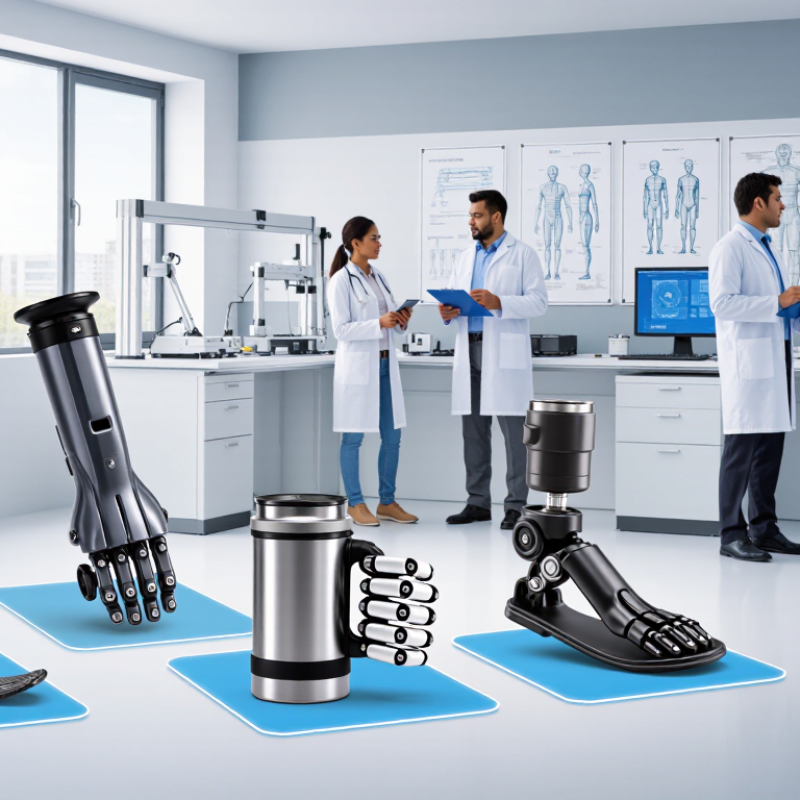
China’s prosthetic device industry brings together component makers, rehabilitation specialists, and manufacturing teams. Its production base covers artificial limbs, joints, sockets, and related mobility components. In workshops, technicians may shape a socket, check its inner surface, and adjust its fit before a user trial. Small changes can affect comfort throughout a full day.
Capabilities vary across suppliers. Some focus on high-volume components, while others provide more customization and fitting support. Materials such as aluminum, titanium, polymers, and composite laminates serve different needs for strength, weight, and cost. A product specification alone cannot show how well a device will perform for a particular person.
Fit matters.
For global buyers, supplier evaluation should include production controls, material traceability, inspection records, and communication after delivery. Ask how teams handle revisions when a trial reveals pressure points or alignment issues. Remote coordination can be practical, but it may not replace in-person fitting. The picture is uneven. Strong manufacturing capacity does not always mean equally strong clinical support, so buyers should assess both before placing orders.
How to Assess Chinese Prosthetic Device Suppliers
When assessing Chinese prosthetic device suppliers, look beyond catalog photos and quoted prices. Ask who designs each product, where components are made, and how fit adjustments are handled. Request material specifications, inspection records, and traceability details for key components. Details matter. A polished catalog is not proof of consistent production.
Review quality controls through documents and direct questions. How are socket dimensions checked? What happens when a component fails inspection? Ask for current certificates and verify that their scope matches the product and your destination market. Requirements differ by country. If possible, arrange a factory audit or an independent pre-shipment inspection. A video call can help, but it cannot replace every on-site check.
Discuss clinical support, training, spare parts, and response times before placing an order. Request a sample or trial unit, then assess comfort, finish, weight, and adjustment range with qualified users or clinicians. Keep written records of agreed specifications and delivery terms. No checklist catches everything. Even careful reviews can miss production changes, so keep communication open and recheck critical details before repeat orders. A low price may be useful, but it should not outweigh fit, safety, or dependable support.
China Prosthetic Device Suppliers: A Buyer’s Assessment Framework
Suggested evaluation weights for comparing suppliers. The scores are a buyer-defined framework, not measured supplier performance or market averages.
Check quality-system records, product testing, material documentation, traceability, customization capability, and service support. Confirm that certificates and regulatory documents apply to the specific device and destination market; requirements vary by product classification and jurisdiction.
Quality Standards and Certifications for Global Buyers
Quality standards matter because a prosthesis must perform reliably beyond the showroom. The WHO and UNICEF Global Report on Assistive Technology (2022) estimates that more than 2.5 billion people need one or more assistive products, while nearly one billion lack access. That scale makes traceable quality essential. For global buyers, ISO 13485 certification can indicate a documented medical-device quality management system, but it does not prove every device performs well. Check that the certificate covers the actual factory and product category.
Ask suppliers for applicable test reports, material specifications, and records linking each shipment to its production batch. ISO 10328 provides structural testing methods for lower-limb prostheses; ISO 14971 addresses medical-device risk management. Requirements differ by destination market, so confirm local registration and documentation needs before ordering. A certificate is not a performance guarantee. Paperwork can still miss problems such as a poorly finished socket edge or inconsistent alignment; sample inspection and user trials matter.
Tips: Request current certificates, their scope, and the issuing body’s details. Compare test results with the exact model offered, not a similar one. Keep a written record of defects and corrective actions. Small gaps matter. A supplier’s willingness to explain them may be more useful than a polished brochure.
Steps for Sourcing Prosthetic Devices from China
Begin with the user’s needs, not a catalogue. For a below-knee prosthesis, document the socket interface, suspension type, compatible components, and expected daily activity. The WHO Global Report on Assistive Technology (2022) estimates that 2.5 billion people need assistive products, while nearly one billion lack access. This figure covers assistive products broadly, not prostheses alone.
Shortlist Chinese suppliers that can explain their manufacturing scope and quality checks. For lower-limb prostheses, ask whether structural testing follows ISO 10328 and request reports matching the exact model and configuration. Review material specifications, component traceability, inspection records, warranty terms, and fitting support. A generic certificate proves little. A sample can still mislead; batch consistency needs checking. Consider an independent factory inspection before placing a large order.
Before paying a deposit, approve a written specification with drawings, units, tolerances, packaging details, and acceptance criteria. Order a small pilot batch, then compare delivered components against the approved sample. Record any deviations, even minor ones, and agree on corrective actions in writing. Confirm shipping dimensions, spare-part availability, and who handles technical questions after delivery. These details are easy to overlook. That is exactly why they deserve attention.