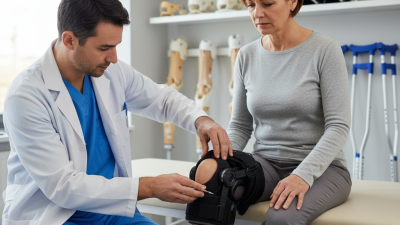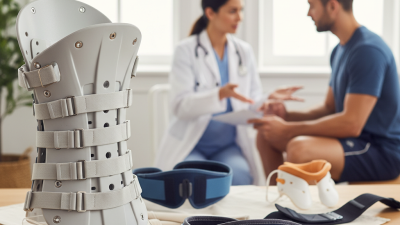
Choosing Orthopedic Bracing for global sourcing requires more than comparing prices, colors, or catalogue photographs. A brace may look impressive online, yet fail when it rubs the skin, limits movement, or becomes difficult to adjust. Buyers must examine anatomy, intended use, patient comfort, durability, and clinical evidence together. The smallest buckle can affect daily compliance.
Dr. Joan E. Sanders, a recognized researcher in orthotic design, offers a practical principle: “The device must fit the person, not the other way around.” This idea should guide every sourcing decision. A knee support for post-operative recovery differs from a spinal brace for long-term management. Material choice matters too. Neoprene feels flexible, while thermoplastic components can provide firmer control. Neither option is automatically better.
Global sourcing adds another layer of responsibility. Suppliers should demonstrate consistent manufacturing, documented quality systems, traceable materials, and appropriate market certifications. ISO 13485 may indicate a structured medical-device quality process, but it does not replace product-specific verification. Requirements also vary between markets. Review them carefully.
No checklist is perfect. A sample may perform well in a laboratory but disappoint during a humid commute. Ask for fit trials, user feedback, adjustment instructions, and realistic wear testing. Speak with clinicians, distributors, and experienced patients. Their comments often reveal problems hidden in technical sheets. A reliable sourcing partner welcomes difficult questions and provides evidence, not vague promises. Cost still matters, but the cheapest brace can become the most expensive choice when returns, complaints, and poor patient adherence follow.
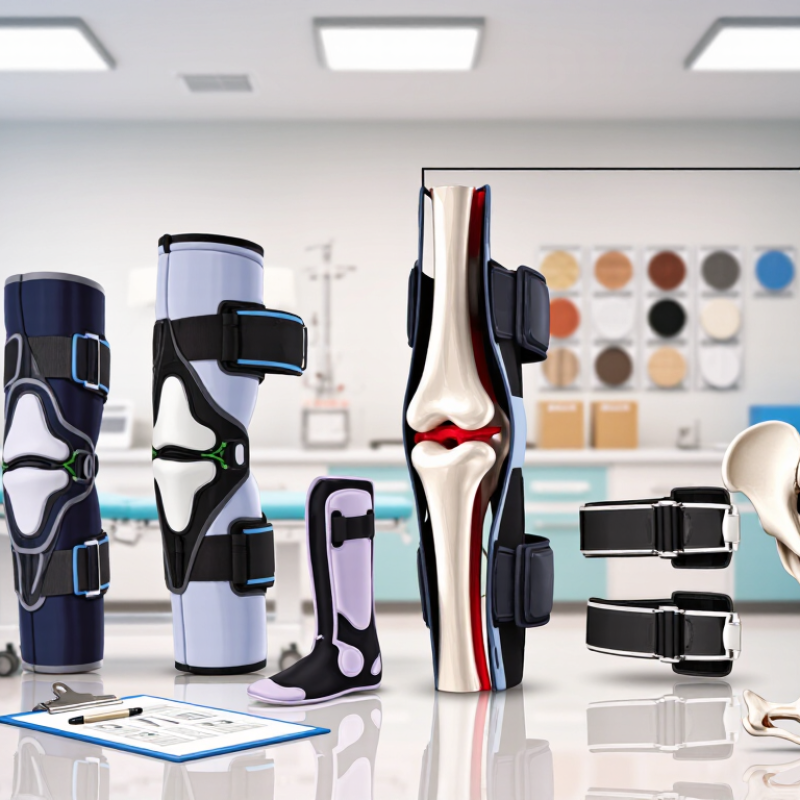
Orthopedic bracing should begin with the clinical problem, not the product catalogue. A soft knee sleeve can provide warmth, compression, and mild support during early discomfort. A hinged knee brace offers controlled movement after ligament injury or instability. An ankle brace may limit inversion after a sprain. Wrist splints can reduce painful motion during rest or work. Spinal and cervical braces require greater caution because incorrect restriction may weaken muscles or hide worsening symptoms. Fit matters. A brace must match the patient’s anatomy, activity level, skin condition, and rehabilitation stage.
Tips: Ask for size charts, pressure guidance, material details, cleaning instructions, and independent test reports. Check whether hinges, straps, and closures can be replaced. Request samples for movement trials, not only visual inspection. Confirm labeling and clinical documentation for each destination market. A lower unit price may become expensive when returns, discomfort, or inconsistent sizing appear.
Clinical advice should guide selection, especially after surgery, fracture, neurological symptoms, or persistent swelling. Procurement teams should also compare breathability, seam placement, adjustability, and wear time. An athlete may need stability during cutting movements, while an older user may need simple fastening and low skin pressure. The difficult lesson is that “universal support” rarely fits everyone well. Even a technically strong brace can fail when users cannot apply it correctly. Record feedback from clinicians and patients, then revise specifications before larger global orders.
| Orthopedic Bracing Type | Primary Joint or Region | Typical Clinical Uses | Support Level | Common Construction and Materials | Key Sizing Measurements | Important Sourcing Specifications |
|---|---|---|---|---|---|---|
| Wrist and Thumb Brace | Wrist, thumb, and hand | Carpal tunnel symptom management, thumb-base osteoarthritis, tendon irritation, mild sprains, and post-injury stabilization | Low to moderate | Neoprene, elastic textile, breathable spacer fabric, hook-and-loop closures, and removable aluminum or polymer stays | Wrist circumference; thumb circumference or hand length for thumb-inclusive designs | Check palmar stay position, thumb mobility, left/right configuration, seam comfort, latex status, and wash durability |
| Elbow Support | Elbow and forearm | Lateral or medial elbow tendinopathy, mild strains, sports-related overuse, and compression support during activity | Low to moderate | Elastic knit, neoprene, silicone grip strips, compression pads, and adjustable straps | Forearm or elbow circumference, usually measured at a defined distance from the joint crease | Verify compression consistency, edge rolling resistance, skin-contact materials, and whether the product is activity-specific |
| Shoulder Immobilizer | Shoulder, upper arm, and torso | Postoperative protection, shoulder dislocation management, rotator cuff procedures, and selected fractures under clinical direction | Moderate to high | Padded textile sling, adjustable body strap, thumb loop, waist strap, and optional abduction pillow | Chest or torso circumference, arm length, and laterality | Specify immobilization angle, padding thickness, quick-release hardware, breathable lining, and compatibility with postoperative protocols |
| Clavicle or Posture Support | Upper back, shoulders, and clavicle | Postural cueing, mild clavicle support, and temporary shoulder retraction after assessment by a healthcare professional | Low | Padded straps, elastic webbing, hook-and-loop adjustment, and soft lining | Chest circumference and shoulder width | Avoid excessive strap pressure; evaluate padding, adjustability, odor control, and comfort during prolonged wear |
| Lumbar Support | Lower back and waist | Short-term support for mechanical low-back discomfort, lifting activities, and selected occupational applications | Low to moderate | Elastic or neoprene belt, hook-and-loop closure, foam or mesh panels, and flexible stays | Waist or hip circumference according to the manufacturer’s size chart | Define belt height, stay configuration, ventilation, closure strength, washing method, and warnings against prolonged over-tightening |
| Abdominal or Hernia Support | Abdomen and groin region | Temporary support for reducible hernias or abdominal-wall support when prescribed; not a substitute for surgical evaluation | Low to moderate | Elastic abdominal panel, adjustable straps, removable compression pads, and soft inner fabric | Waist circumference and hernia location or pad placement | Confirm pad adjustability, pressure distribution, skin protection, cleaning instructions, and clinical-use labeling |
| Knee Sleeve | Knee joint | Mild osteoarthritis symptoms, swelling management, proprioceptive support, and minor strains | Low | Circular-knit textile, neoprene, elastic compression zones, and optional silicone grip bands | Thigh and calf circumference, or knee circumference at a specified reference point | Request compression class where applicable, dimensional stability, breathability, colorfastness, and resistance to seam failure |
| Hinged Knee Brace | Knee joint and surrounding ligaments | Medial or lateral collateral ligament support, controlled instability, postoperative protection, and selected osteoarthritis unloading designs | Moderate to high | Textile sleeve or frame, aluminum or polymer hinges, condyle pads, straps, and rigid uprights | Thigh and calf circumference, knee width, leg length, and laterality | Specify hinge range of motion, stop angles, brace migration control, hinge durability, and fitting instructions |
| Patellar Stabilization Brace | Kneecap and knee joint | Patellar tracking problems, recurrent patellar instability, and selected anterior knee pain conditions | Low to moderate | Elastic sleeve, buttress pad, patellar ring, adjustable straps, and breathable knit fabric | Knee circumference and patellar position; left/right configuration may be required | Assess buttress placement, anti-migration performance, pressure comfort, and suitability for movement-based activities |
| Ankle Stabilizer | Ankle and foot | Lateral ankle sprains, chronic ankle instability, and return-to-activity support | Moderate | Neoprene or textile sleeve, figure-eight straps, semi-rigid side supports, and molded polymer shells | Ankle circumference, shoe size, foot length, and laterality | Check shoe compatibility, inversion and eversion control, strap security, edge comfort, and moisture management |
| Ankle-Foot Orthosis | Lower leg, ankle, and foot | Foot drop, selected neurologic conditions, post-stroke gait support, and specific alignment needs prescribed by a clinician | Moderate to high | Molded thermoplastic, carbon-composite elements, padded liners, straps, and articulated or fixed ankle joints | Calf circumference, ankle width, foot length, shoe size, height, and laterality | Require clear alignment instructions, trim-line specifications, footwear compatibility, fatigue resistance, and professional fitting guidance |
| Cervical Collar | Neck and cervical spine | Temporary cervical motion restriction after injury or surgery when prescribed; not appropriate for unsupervised diagnosis or long-term use | Moderate to high | Foam or thermoplastic shell, washable cover, chin support, and adjustable closure | Neck circumference and vertical neck height from jawline to shoulder | Specify radiolucent components where needed, airway access, skin-contact safety, height adjustment, and medical-use documentation |
| Spinal Orthosis | Thoracic, lumbar, or thoracolumbosacral spine | Postoperative immobilization, selected spinal fractures, deformity management, and controlled motion restriction under specialist supervision | High | Rigid thermoplastic or metal frame, contoured pads, straps, liners, and adjustable extensions | Waist, hip, chest circumference, torso height, and anatomical landmarks | Require precise range-of-motion control, structural load testing, radiographic compatibility where applicable, and professional fitting documentation |
| Walking Boot or Fracture Orthosis | Foot, ankle, and lower leg | Stable fractures, severe sprains, tendon injuries, and postoperative protection when weight-bearing is clinically permitted | High | Rigid polymer shell, air or foam padding, rocker sole, adjustable straps, and removable liner | Foot length, shoe size, calf circumference, and laterality | Verify sole traction, shell strength, liner hygiene, load rating, strap replacement options, and instructions for weight-bearing limits |