What Are the Top Custom Prosthetics Suppliers in 2026?

Choosing the right Custom Prosthetics supplier in 2026 involves more than comparing prices or viewing polished product photographs. A dependable provider should combine clinical knowledge, skilled craftsmanship, responsive fitting services, and transparent communication. The strongest suppliers often work closely with prosthetists, rehabilitation teams, and users throughout the design process. They study gait, comfort, skin sensitivity, activity levels, and daily routines before recommending a solution. Small details matter. A socket edge can affect an entire workday.

This guide examines leading Custom Prosthetics suppliers through practical, evidence-based criteria. These include material quality, digital scanning capabilities, adjustment support, manufacturing consistency, warranty clarity, and documented professional experience. User feedback also deserves attention, especially when it describes long-term wear rather than a first impression. However, no ranking can fit every patient. That is an important limitation. A supplier serving competitive athletes may not suit a child needing frequent growth-related adjustments. Regional access, clinician partnerships, insurance processes, and repair timelines can change the real value of an otherwise impressive company.

The discussion aims to remain balanced and useful. It will highlight established strengths while acknowledging gaps, service differences, and unanswered questions. Readers should verify current certifications, clinical recommendations, and local availability before making decisions. Good prosthetic care is personal. The best supplier is not always the most visible one. Sometimes, careful follow-up matters more than advanced marketing.
What Are the Top Custom Prosthetics Suppliers in 2026?

What Defines a Top Custom Prosthetics Supplier in 2026?

A top custom prosthetics supplier in 2026 must solve more than limb loss. It must understand movement, skin health, work demands, and personal goals. The WHO and UNICEF Global Report on Assistive Technology estimates that over 2.5 billion people need assistive products worldwide. That figure may exceed 3.5 billion by 2050. Demand is growing, but quality cannot become a factory shortcut.

Clinical partnership defines the strongest suppliers. Prosthetists should measure residual limbs carefully, use digital scanning when appropriate, and explain material choices clearly. A practical supplier also supports repeated socket adjustments, gait reviews, and maintenance after delivery. Fit matters most. The WHO Standards for Prosthetics and Orthotics emphasize trained personnel, user-centered care, and reliable follow-up. These principles remain useful, even when new software looks impressive.

Transparent evidence separates expertise from marketing. A supplier should document comfort, walking stability, repair times, and return visits. It should also follow recognized quality systems, such as ISO 13485, while respecting local medical-device requirements. Price matters, but a cheaper first fitting may create expensive skin problems later. I would still question suppliers that show perfect case studies only. Real users sweat, fall, change jobs, and gain weight. Their devices must adapt. A top supplier listens after delivery, not just before payment.


Key Criteria for Evaluating Custom Prosthetics Manufacturers

Choosing a custom prosthetics supplier in 2026 requires more than comparing catalog prices. Strong manufacturers show documented clinical experience with similar cases. These may involve amputation level, activity, skin condition, and daily environment. Ask who performs the assessment and verifies socket fit. Real expertise appears in careful questions, not polished product pages. Small details matter.

Evaluate material traceability, design controls, and quality records. A dependable supplier should explain its process, inspection points, and corrective actions clearly. Certifications such as ISO 13485 can support confidence, but certificates alone do not prove clinical suitability. Request evidence of fit testing, adjustment rates, repair support, and response times. Check how digital scans, gait observations, and patient feedback guide revisions. Comfort can change after hours of walking. That test is often missing.

Reliable manufacturers also protect continuity of care. Confirm clinician communication, warranty boundaries, replacement-part availability, and local provider training. Ask whether informed consent, data protection, and regional medical-device requirements are addressed before production. Transparent suppliers admit limitations and explain when reassessment is needed. I would question perfect outcome claims. Even a well-made prosthesis may require socket changes as limb volume, strength, or routine changes. A supplier that documents setbacks may be more trustworthy than one promising effortless success.

Leading Custom Prosthetics Suppliers and Their Specialties

Leading custom prosthetics suppliers in 2026 are increasingly defined by clinical specialization rather than product volume. Some focus on advanced lower-limb systems, creating lightweight sockets for walking, running, or uneven ground. Others specialize in upper-limb prosthetics, including body-powered designs and electronically controlled hands. Their strongest work usually begins with a detailed assessment of posture, muscle strength, lifestyle, and daily environments.

Digital scanning and computer-aided manufacturing have improved socket accuracy. A clinician can capture the residual limb, adjust pressure zones, and review alignment before fabrication. However, digital tools do not replace experience. Skin sensitivity, sweating, scar tissue, and small changes in limb volume can affect comfort within hours. The first socket is rarely perfect. Careful suppliers provide follow-up adjustments instead of treating delivery as the final step.

Pediatric specialists require different expertise because children grow quickly and their activity levels change often. They may offer modular components, adjustable sockets, and repair support for active school routines. Sports-focused suppliers may build reinforced designs for cycling, swimming, or recreational training, but performance claims should be supported by documented testing and clinician feedback. Some providers also offer custom cosmetic covers, though appearance should not compromise weight, ventilation, or maintenance. A reliable supplier explains material choices clearly, records fitting changes, and communicates realistic service times. Mistakes can still happen, especially when measurements are rushed. Reliable teams acknowledge them and correct the design with evidence.

Custom Prosthetics Suppliers in 2026: Market-Need Context

Estimated global demand for prosthetic and orthotic services, highlighting the scale of need addressed by suppliers specializing in custom fitting, fabrication, and clinical support.

The World Health Organization estimates that more than 30 million people require prosthetic or orthotic services globally, with approximately 80% living in low- and middle-income countries. The 24 million figure is calculated from that published 80% share. This market context supports demand for suppliers with strong capabilities in custom sockets, patient-specific fabrication, rehabilitation support, and scalable clinical delivery.

How Custom Prosthetics Are Designed, Produced, and Fitted

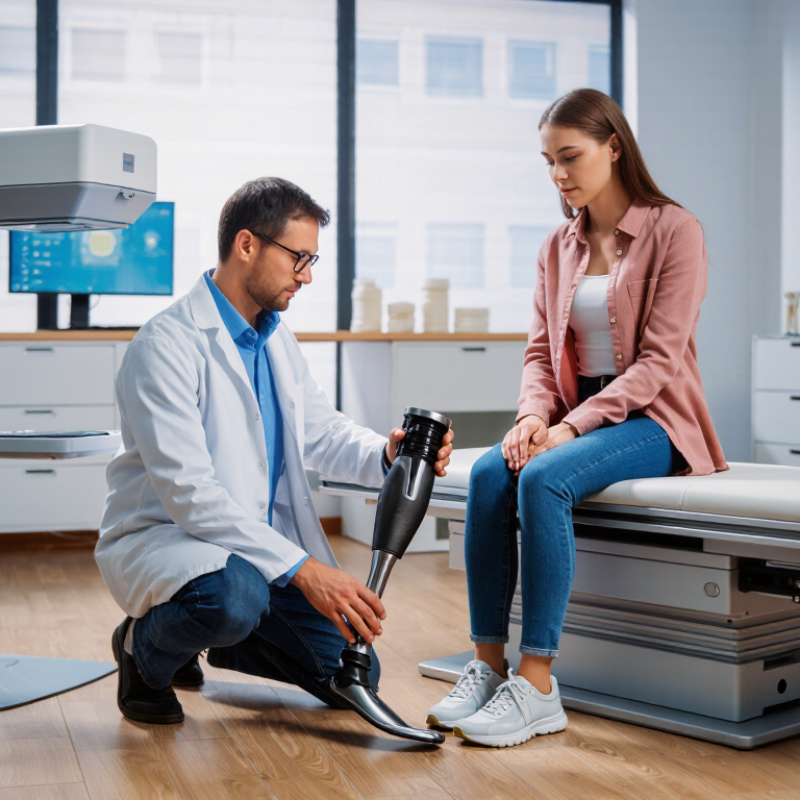
Custom prosthetics begin with a person, not a catalogue. A prosthetist reviews residual-limb health, muscle strength, gait, work, and daily routines. The WHO/UNICEF Global Report on Assistive Technology estimates that more than 2.5 billion people need assistive products worldwide. Access can fall to 3% in some settings. That gap makes careful design essential. A clinician may use plaster casting or 3D scanning, then adjust the digital model for pressure relief and joint alignment. The process is rarely perfectly linear.

Production usually starts with a temporary test socket. It reveals rubbing, looseness, heat, and alignment problems before permanent materials are used. Technicians may combine silicone liners, thermoplastics, carbon-fiber composites, and lightweight metal components. Each material needs documented sourcing and inspection. WHO Standards for Prosthetics and Orthotics recommend trained personnel, traceable procedures, and continued follow-up. A reliable supplier should provide clear records, repair options, and realistic delivery times, not impressive promises.

Fitting is active testing. The user walks, sits, climbs stairs, and reports discomfort. Clinicians inspect skin after movement, because a painless socket in the clinic may fail after six hours outside. Small alignment changes can improve balance dramatically. Still, even skilled teams can miss a problem during the first appointment. That weakness deserves honest review. Suppliers ranking highly in 2026 should support repeated adjustments, measurable outcomes, and communication between the user, prosthetist, and production team. Fancy scanning helps, but judgment remains central.

Comparing Supplier Services, Technologies, Costs, and Support

What Are the Top Custom Prosthetics Suppliers in 2026?

Comparing Supplier Services, Technologies, Costs, and Support

Choosing a custom prosthetics supplier requires more than comparing online prices. A reliable provider begins with a detailed assessment of mobility, skin condition, work demands, and daily routines. Fit matters. The strongest suppliers use 3D scanning, pressure mapping, and digital design to improve socket comfort. However, technology cannot replace skilled clinical judgment. Ask who checks alignment during walking trials and how many adjustments are included.

Costs vary widely by limb type, materials, control systems, and insurance requirements. A clear quotation should separate evaluation fees, fabrication, components, delivery, repairs, and future replacements. Low prices can become expensive after repeated socket changes. Request realistic timelines. Custom work often needs several fitting sessions. Ask twice. Vague answers deserve caution.

Support after delivery can reveal a supplier’s real reliability. Look for scheduled follow-ups, responsive repair teams, documented warranties, and accessible replacement parts. Remote consultations may save travel time, but complex alignment problems still need in-person review. Suppliers should explain maintenance in plain language and provide written care instructions. Evidence of licensed specialists, quality procedures, and user feedback adds confidence, though testimonials are not perfect proof. No scorecard is perfect. Personal comfort can change with weight, activity, or climate, so even a well-designed device may need refinement. A careful supplier admits this possibility and plans for it.